

This is Your Reminder to Look Down
- Lauren Von Apen

- Feb 3
- 3 min read
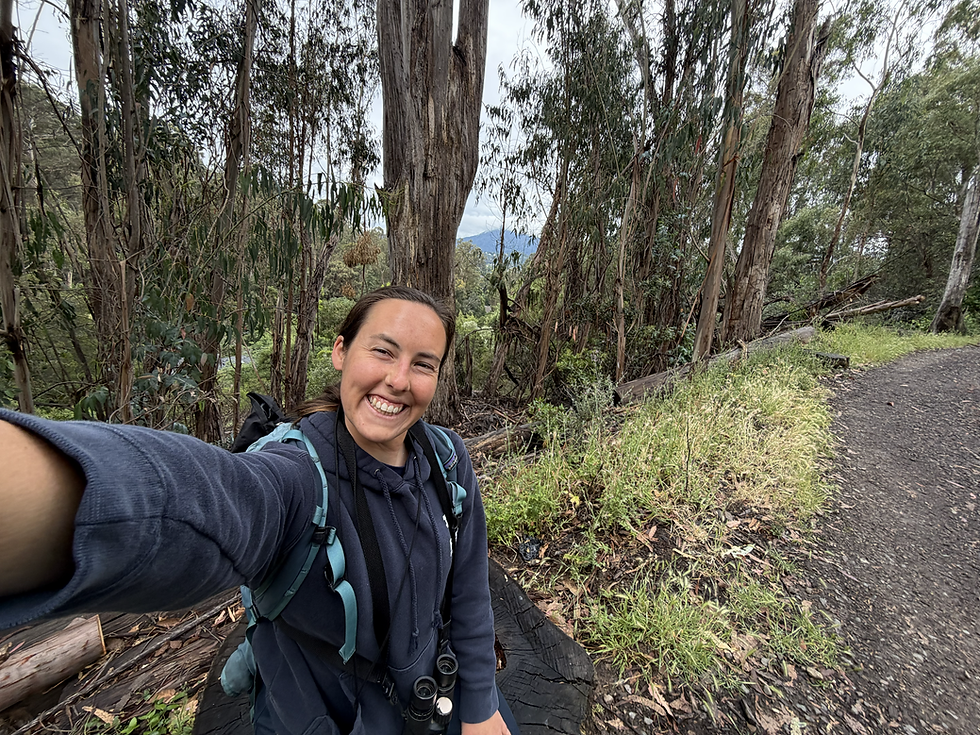
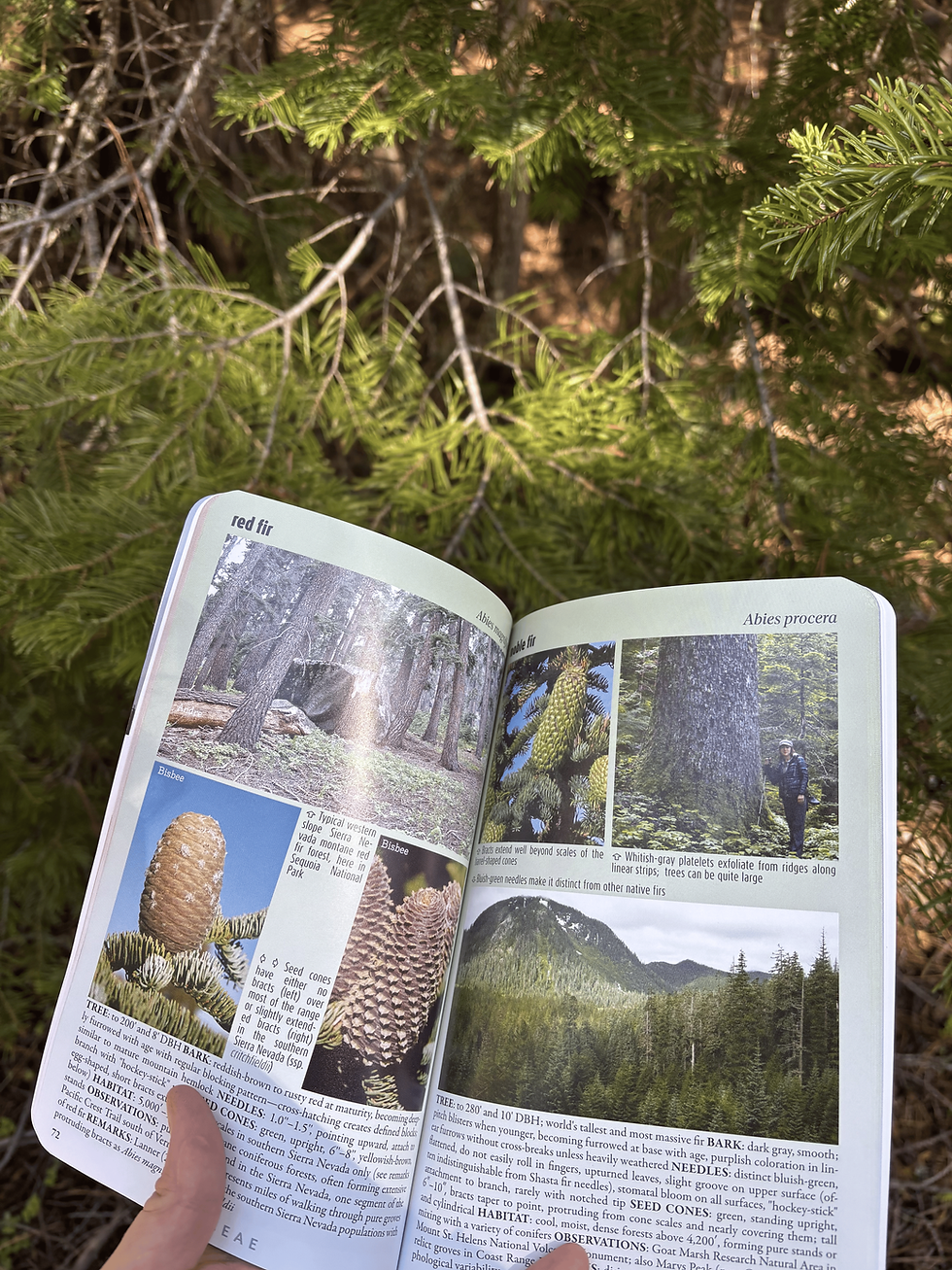
As a forestry student at UC Berkeley, I spent the vast majority of my time looking up. In the Sierra Nevada, surrounded by towering sugar pine, incense cedar, and Douglas fir, I rarely took a minute to sit on the rich humus of the forest floor and look down. The summer I spent at Forestry Camp, DBH tape in hand, I cored trees, grappled with Latin names, and wrote mock silvicultural prescriptions. But through all the excitement, one of the most memorable moments came the day we learned about fungi, bacteria, and tree-killing beetles.

We had hiked up a small bluff. “Look ahead,” our professor said, pointing at the valley stretching out from under us. “If you took away the life that is visible to the naked eye, what would you see?” The answer came to me instinctively, just as he responded. It would look the exact same.
I had never thought of the landscape in that way before. I was so fascinated by the macro flora and fauna that I hadn’t given much of a thought to the teeming world of microbes that lived, grew, competed, reproduced, and died right under our very noses. So much life hidden in the air, on the trees, in the soil, and within our very bodies. It’s seeing the forest for the trees, right?
When I started my position as a GrizzlyCorps fellow working with the Composting Education Program at UCCE Santa Clara, the only familiarity I took with me was a vague memory of the smelly bin my dad kept in the yard. But nature has a beautiful way of scaling, and now instead of working with trees and the things that live, eat, and grow within them, I am working with soils and the things that live, eat, and die within them.

I’ve learned so much in just these few months. Beyond the work of outreach and volunteer management, I am finding myself drawn more and more into the art and science of composting.
My worms have kept me wildly entertained. I created a DIY worm bin out of Goodwill plastic drawers and red wigglers from Petco that would’ve otherwise made a lucky lizard very happy. Instead, they get to live out their lives in luxury, swimming in their food and producing the highly nutritious castings that gardeners so desire.
Like in forestry, my new hobby and work combines a zen-like attention to life while simultaneously satisfying the scientific curiosity I hold dear to my heart. The same cycles apply— both in the mountainous groves and in the compost piles full of visible and invisible decomposers, I can become mesmerized by the patterns of carbon, water, predation, decay, and growth: a constant of change. With time, these cycles are inevitable.
The more I learn about the natural world, the more I know there is to explore. At the same time, the more I learn, the more I feel that natural things follow the same basic principles. I often like to think of the quote by Khalil Gibran, that “In one drop of water are found all the secrets of all the oceans”. I will never know the secrets of all the oceans, and I may never even understand one drop, but I have to start somewhere.


Comments