

From DC to the North Coast: the importance of forests & learning how to care for them
- Renata Urbina De la Flor
- Jan 20
- 3 min read
I would like to reserve this first sentence to recognize the land I now live on, and the indigenous peoples that have cared for her to this day; the Tolowa, Shasta, Karok, Yurok, Hupa, Whilikut, Chilula, Chimariko, and Wiyot tribes. I invite you to read more on California Indian History.
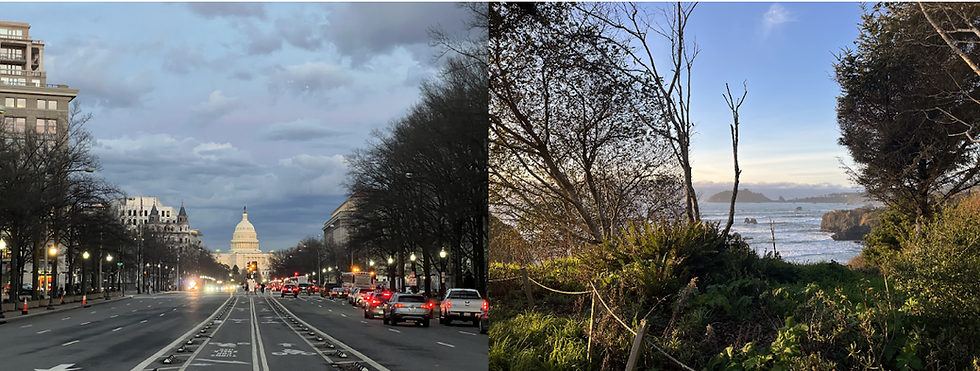
It’s about a ten-minute walk from downtown Arcata to the edge of a 2,350-acre second-growth redwood forest. (City Forests. City of Arcata, https://www.cityofarcata.org/190/City-Forests) In other California North Coast towns, there is no separation between forests and homes. Let me paint a picture of how special this proximity to large, forested land is: in the outskirts of Washington, DC, where I moved from, the nearest forest of that size is 2 hours away by car, or a 22-hour walk. The East Coast was once home to the majority of old-growth forests in the U.S., today, the largest are found in the North Coast of the Western United States.

This separation from forests certainly takes a toll on how we think. And how could it not? If the nearest forest is hours away, it no longer feels part of our day-to-day life. It becomes a luxury that requires transportation and time off from work or school to visit—things not everyone has access to. As time passes, and the distance from the nearest forest increases, the knowledge and reasons why they matter feel like secrets meant for others to uncover.
Tired of living in a concrete city, I decided to discover for myself why forests matter. It took one day in the Pacific Northwest to realize, the forest shares its secrets like adults share candy on Halloween night—freely, to those who knock.

And I knocked! I was out in the Arcata Community Forest counting banana slugs when I saw this Pacific giant salamander attempting to eat a banana slug. This was the foundation I had when I started working at the Humboldt County Resource Conservation District (RCD). Resource Conservation Districts (RCDs) are special districts that are part NGO, part government agency. RCDs get funding through grants they apply for and are in close communication, and often partner with local tribes and community partners. So, when I attended my first cultural burn, and we shook out the piles before lighting them so animals like salamanders could escape, I understood why it mattered.


“‘Cultural burning’ refers to the Indigenous practice of ‘the intentional lighting of smaller, controlled fires to provide a desired cultural service, such as promoting the health of vegetation and animals that provide food, clothing, ceremonial items and more’ (Roos, 2021)” (NPS, 2024). This referenced cultural burn was a partnership between Native Health in Native Hands and the Briceland Volunteer Fire Department. Diana–the interpreter who led the cultural burn–showed us how to efficiently shake out piles, allowing animals to escape before burning them.
In the two months of my GrizzlyCorps term, I’ve learned from the local tribes and the people who live here that there is life living in and near forests that all work together to care for their home and each other. From the salamander to the smallest microorganisms in the soil. Life in the forest is connected, and when we care for one another, we thrive.


Comments