

Microscopic, Macro-Impact: IPM
- Jade Gutierrez- Fregozo

- Apr 7
- 3 min read
I grew up in the Salad Bowl of the world and attended elementary school in the outskirts of Salinas, in a farm town named Spreckels. In the late 1800s to the 1900s the town was known for Spreckels Sugar Company, a sugar beet refinery whose old buildings still stand across the street from the town. As part of a field trip one day, we went on a tour around the small town to learn about its history and I was told about the diamond shaped sugar beet design that was placed at the top and center of some houses, marking their connection to the sugar beet factory. I remember looking out at the endless fields of crops from the grass field while at school and how on certain days we weren’t allowed to be out on the field due to pesticide spray exposure. Up until college, the only perception I had of agriculture was the conventional manner of cultivating crops. I was introduced to agroecology and organic farming practices during my undergrad at UCSC and felt a newfound connection to it despite growing up surrounded by it. During this time I did research for a couple of assignments that helped me understand the effects of pesticides on farm worker health specifically in Monterey county and grew more interested in alternatives since.
Throughout my two terms on the Ecological Farming team with CAFF I’ve assisted the Ecological Pest Management (EPM) program with various projects that have properly informed me of more sustainable integrated pest management (IPM) methods that minimize reliance on pesticides and prioritize prevention strategies. A large part of my time has been spent on processing, mounting, and ID’ing mite specimens as part of CAFF’s EPM field research trials on winegrapes and walnuts in the Sacramento and North San Joaquin Valleys. Although they are microscopic, the damage caused by mites can be immense especially in regions with hot and dry conditions where they thrive. The main indicator of their presence is the yellowing and browning of leaves as well as large amounts of webbing. The project involved doing predatory mite releases, applying methyl salicylate, and predator food sprays to conduct management of spider mites and mitigate their damage.

While I understood that the mites would be very small before working with them, as I was taught the mounting protocol I questioned if I would successfully begin to process them myself. When mounted and held up to the light, they appear as a tiny speck in the middle of the slide. The protocol involves transferring the mites from their collection vials to a lactic acid and iodine solution so that they pick up some color and be put in the warmer for some hours. They are then taken out and mounted with the goal of pressing out the chelicerae that make it possible to identify them as male or female, and they are then put back into the slide warmer for days. That being said, transferring the mites and mounting them on slides seemed like it would be fairly challenging but I’ve found it to be very fulfilling and a great opportunity to work with an insect that’s a bit harder to work with.
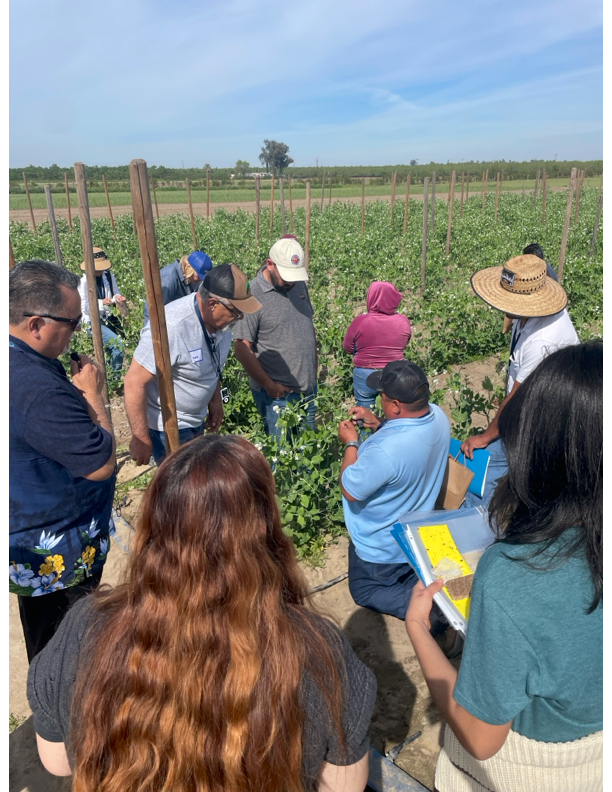
Now during field days that are centered around demonstrating beneficial insect releases, I like getting to see growers excited about this alternate method of pest control. Since a lot of smaller organic growers don’t spray or have more limited options of what they can use to spray, informing growers of prevention methods and other IPM strategies has been a priority. For this particular field day we demonstrated using sticky cards for pest scouting and provided beneficial insects for growers to do releases.

Comments