

A Birder’s Field Notes from Marin County Fire Department

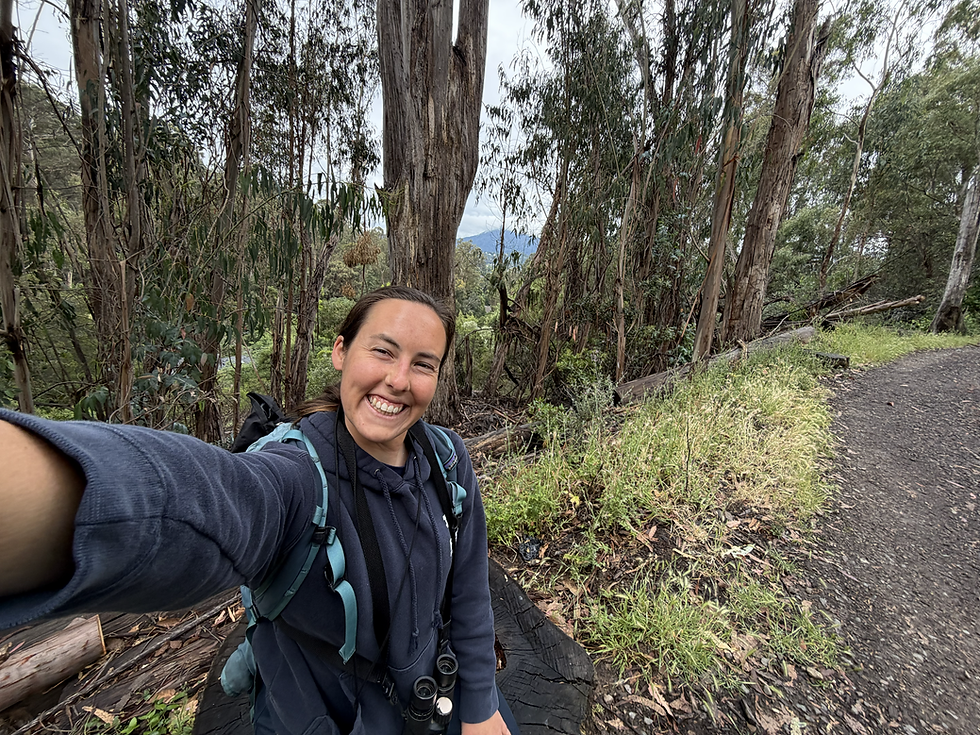
It was an early spring Monday and my office was a fire road. Hikers shot curious glances my way as I inched along the path, but I had eyes for nothing but the brown blurs streaking through the trees. My ears strained for calls.
An angry buzzing stopped me in my tracks. I was amazed this mighty sound was emanating from the unassuming bird a stone’s throw away. The Bewick’s wren hopped from side to side, punctuating its alarm call with glares. The white eyebrow stripe over its eye only increased its sternness.
Everything else fell away. I retreated until the wren quit its tirade, mindful of the poison oak lining the road. I sank onto my heels, binoculars in position.The bird fluttered in and out of the brush and landed on a snag. I tried to discern suspicious patterns in its behavior. The minutes ticked by.
Then I saw it: A little grub dangled from its beak. It returned to the snag and, lo and behold, another Bewick’s wren emerged from a hole in the trunk. I watched the bird pass the catch to its mate before swooping away. The whole moment lasted less than a second.
I had to stop myself from shouting. This was it—my first confirmed nest of the season! I pulled out a rangefinder and carefully marked out a thirty-foot circle with pink flags, gleeful all the way.
Nesting bird surveys are simple, in theory: observe nesting behavior, locate nests, and create appropriate buffer zones. During nesting bird season, most vegetation removal projects must be preceded by surveys to minimize negative impacts. Buffer zones are designated to ensure the work skirts around nests. That Monday, my team was surveying a roadside fuel reduction project.
The catch is, most birds don’t want you finding their nest. Confirming one requires attentiveness, knowledge, and above all else, patience.
Birding is an endeavor that has changed how I see the world. It’s remarkable how much we tune out when we are on our busy way, but in order to bird, one must slow down. In the wake of stillness, the songs slowly return, building into a complex chorus. I pick out their names, each singer a familiar friend. There, the grating call of the California Scrub Jay; there, the lilting notes of the American Robin. As I listen, I find myself a part of something much bigger than myself.
I might have always known, deep down, that I would become a birder. What surprised me more is that this shift was catalyzed by working with the Marin County Fire Department. When I started my GrizzlyCorps term, I knew little about the fire service. Like many people, I just had an image of a red engine in my mind. Why in the world would the fire department care about birds?
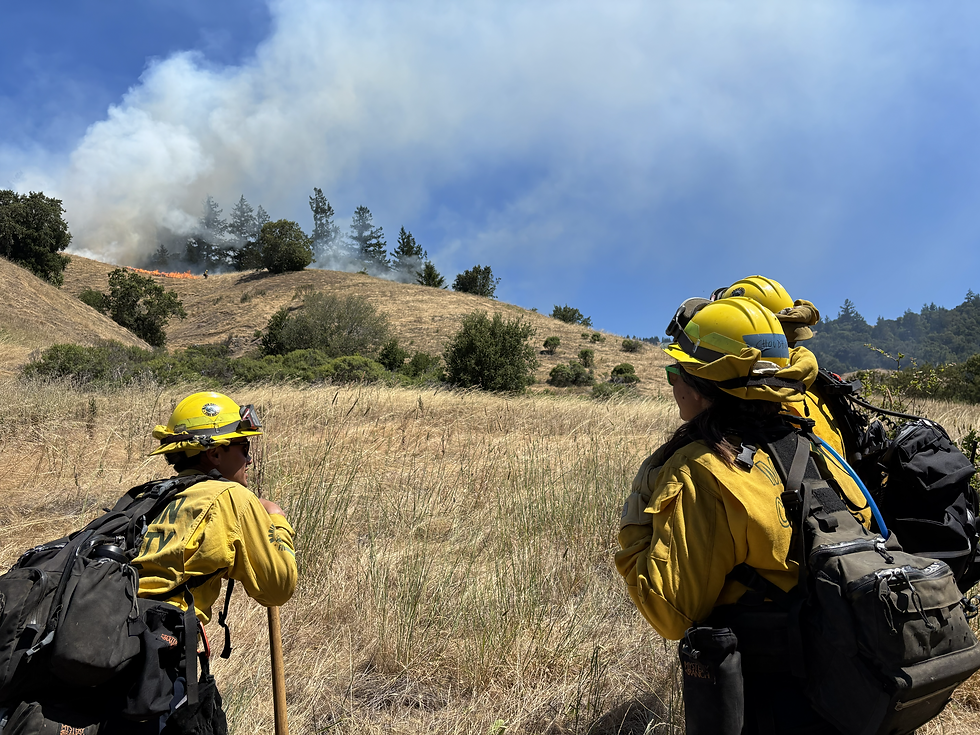
Yes, bird surveys are mandated by law. But, I found myself working amongst people who are deeply passionate about building resilient communities of all kinds. This looks like both protecting people from wildfire and stewarding healthy ecosystems.
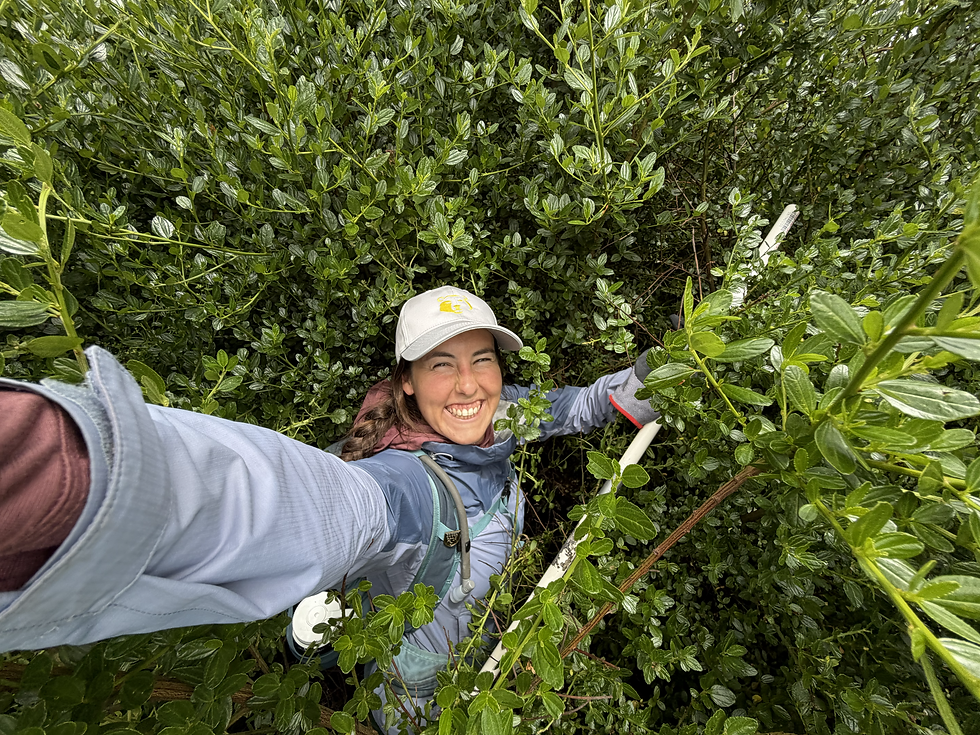
My relationship with fire has always been troubled. Growing up in California, where our collective nerves fray the further we edge into summer, I was taught to fear wildfire. Later in my life, I learned about the damage fire exclusion has had on the land. At first, I didn’t know how to reconcile these perspectives. On one hand, fire suppression, the epitome of human control of the natural environment. On the other, a preservationist environmental ethic that taught me that land should be “untrammeled by man.”
During this past year, I have been taught a third way that goes back to time immemorial. I have had the privilege of hearing Coast Miwok stories, whose homelands I serve, and learned that people have been fire keepers here for generations. In fact, humans are a keystone species in the California coastal prairie, bringing frequent fire to a landscape that infrequently sees natural ignitions. An incredibly diverse ecosystem maintained its existence thanks to this stewardship, very little of which now remains. Fire was a tool, an art, used skillfully like a paintbrush on the land.
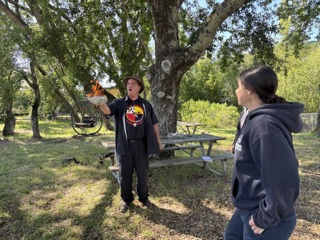
We now live in a world where using fire as a tool is more complicated. Our built environment encroaches into the wildland urban interface, many forests haven’t seen intentional fire for a century and a half, and climate change exacerbates these unfavorable conditions. Despite the challenges, there are a host of communities dedicated to bringing good fire and healthy forests back.
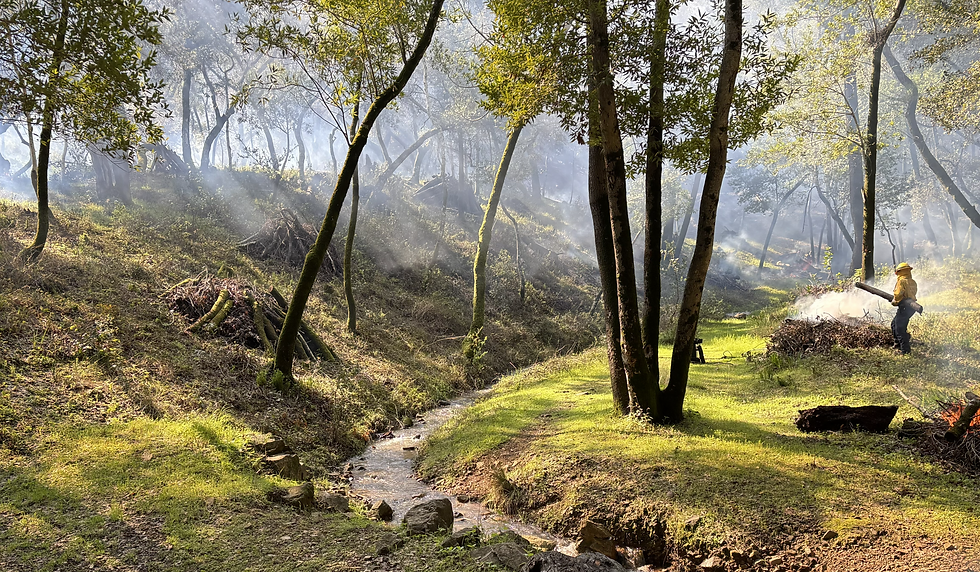
In my time as a GrizzlyCorps fellow, I have had the privilege of being folded into much of this work. Our vegetation management department focuses on creating fire resilience in an ecologically sound manner. Prescribed burns are returning good fire to our landscapes. Where not yet possible, mechanical fuel reduction projects mimic the effects of a low-intensity fire. I have seen that ecosystems thrive with our mindful interference, when we consider the interconnected health of all. Even the smallest creature or rare plant.
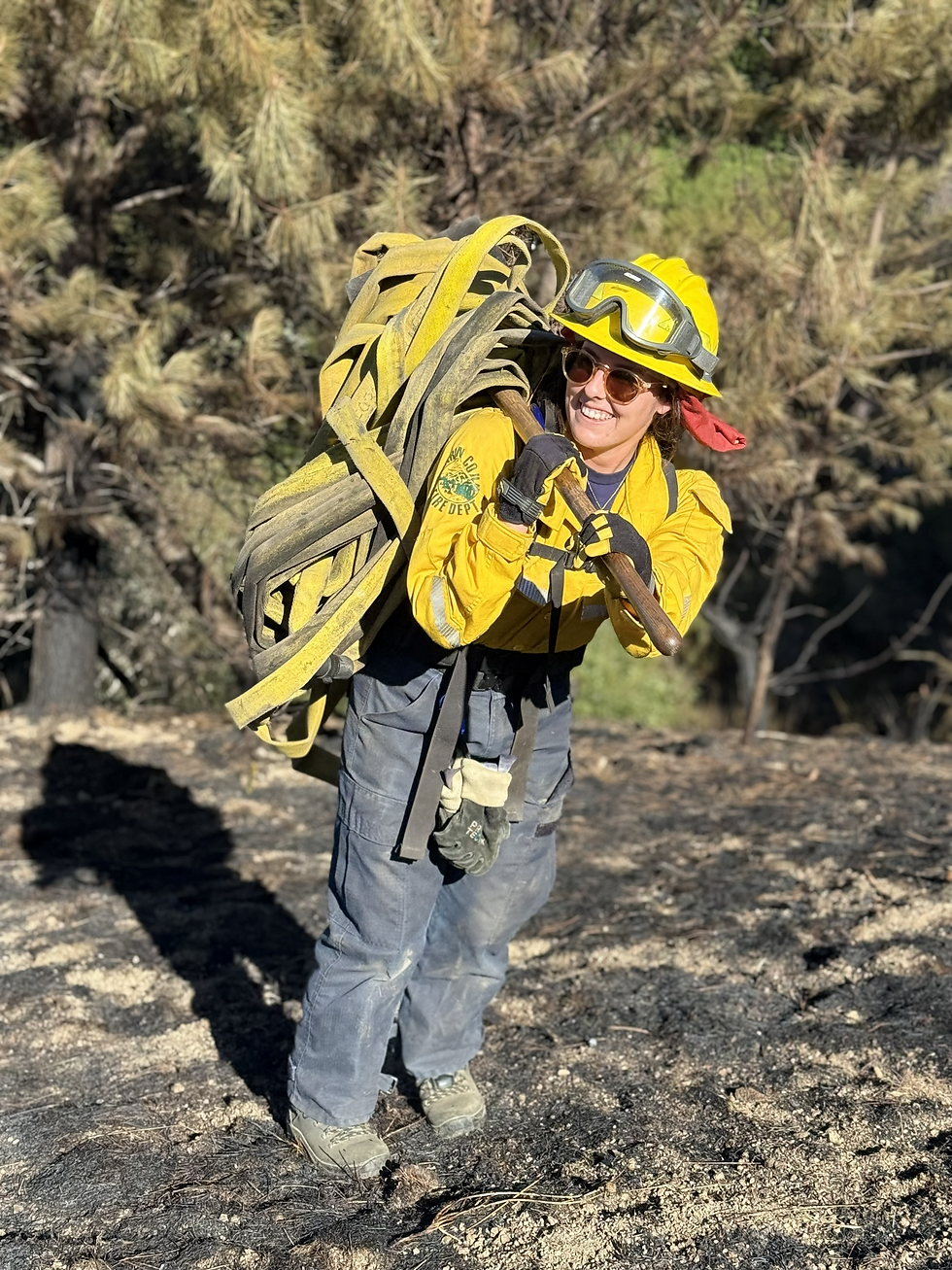
And that brings us back to the unlikely office where I found myself looking for birds. I have found that my Grizzly Corps experience is mending rifts I didn’t know existed in my relationship with the land. We all possess the capacity to contribute to healing; our world just needs us to listen, learn, and act, one song at a time.


Comments