

In the Company of Conifers: Reflections from my GrizzlyCorps Service Term
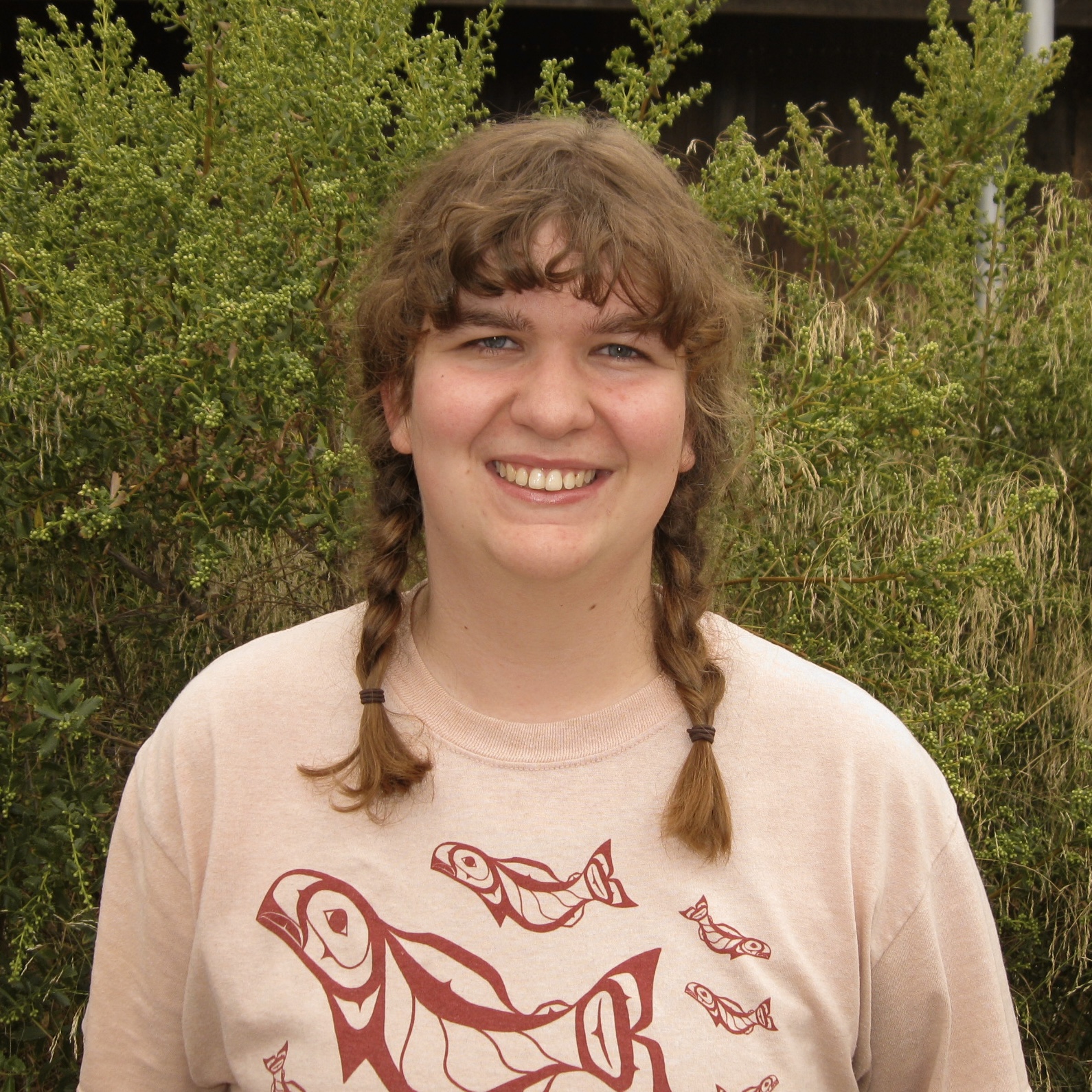
I used to think I understood forests because I knew how to look closely at trees. It wasn’t until I stepped into them that I began to understand what a forest really is.
Growing up with the Sierra Nevada as my backyard, I knew the forests as a place for recreation. I also knew the smoke from wildfires in these forests backdropped many of my summers in the Central Valley. Diving headfirst into forestry was not where I anticipated myself to be after graduating from college. During my time at UC Davis, I existed adjacent to the forestry world through urban forestry internships and working on the whitebark pine genome project. Those experiences laid a foundation in plant sciences and gave me skills that would later translate into many aspects of forestry I encountered during my service term with the Shasta Valley Resource Conservation District (SVRCD) as a Forestry and Fuels Fellow.
With my background in plant sciences, I often saw trees from a close-up perspective. I spent time looking at pine pollen under a microscope or meticulously processing pine seeds to obtain megagametophytes (female tissue that nourishes the embryo) to research resistance to white pine blister rust. I learned to focus on the smallest components of a system. As the idiom goes, I “can’t see the forest for the trees”. What I needed to learn next was how to step back and see the forest as a whole.
After a whirlwind start to my GrizzlyCorps term, I worked remotely with the SVRCD during the government shutdown. I eventually made my way to Siskiyou County. There, surrounded by five National Forests and more hikes than I could ever hope to complete in a lifetime, I began my journey of truly getting to know the forests of Northern California.
Before I could understand the forest, I needed to know its trees. What better way than a 5-week webinar on the trees of California? During the second session of the webinar, ecologist Michael Kauffmann went over conifers of California. I soon learned I lived about an hour from an ecological hotspot of conifers. This region is dubbed the “Miracle Mile” within the Russian Wilderness of Siskiyou County. Within roughly a square mile, there are 18 species of conifers. This diversity is no accident. It reflects the convergence of the Pacific Coast, Cascade, and Sierra Nevada ranges, creating a mosaic of microclimates that support a remarkable range of species. It is a place where geology, climate, and biology intersect in ways that make diversity possible.
A few weeks after the webinar ended, SVRCD forestry staff set out to gather conifer specimens for the University of California Agriculture and Natural Resources’ Tree School event. In a single trip to the Miracle Mile, we collected around 12 different conifer species, bringing that diversity from concept into something tangible.
(From left to right) Identifying a tree in the “Miracle Mile”, View of Mount Shasta from a project site
These trees respond to their surroundings much like people. The more time I spent in these forests, the more I began to notice parallels between ecological systems and human communities. In Siskiyou County, I have met a wide range of people, including environmental advocates, ranchers, and artists. Each is shaped by the land and connected to it in their own distinct way.
It raises a question: does the landscape shape the people, or do the people shape the landscape? From what I have seen, it is both. The relationship is reciprocal, with each continually influencing the other over time. Just as communities are shaped by shared histories, challenges, and resources, forests are shaped by the interactions within them.
A forest is not a singular thing, but a relationship. It is an ongoing exchange between living and non-living elements. Trees, plants, and animals interact constantly with soil, water, and climate, each influencing the conditions of the others. No single part exists in isolation; the system depends on connection. What we call a forest is really this dynamic whole—complex, interconnected, and always changing.
That sense of reciprocity between people and place becomes even more apparent in the presence of fire. Fire is not separate from these landscapes. It has long been a force that shapes them, just as it has shaped the communities that live within and alongside them. And yet, the way we experience “wildfire” today can feel at odds with that relationship, evoking disruption, loss, and uncertainty.
(From left to right) Pile burn at project site, Broadcast burn at Osgood Fuel Break
In California, wildfire season has increasingly come to feel like a fifth season, arriving with a familiarity that is both expected and unsettling: winter, spring, wildfire, summer, and fall.
Within this tension, the intentional use of fire through prescribed fire and Indigenous cultural burning offers a different way forward. Rather than reacting to fire only in moments of crisis, it reflects an effort to reintroduce fire with intention and care. It is a way of working with the landscape, acknowledging fire’s natural role while seeking to restore balance to systems altered over time.
This brings to mind the book Tending the Wild by M. Kat Anderson, where she writes that, “Fire is not just a destructive force; it can be a tool for rejuvenation when applied wisely.” That idea shifts how we understand fire, not only as something to respond to, but as something to engage with intentionally.
It also invites us to look to Indigenous cultural burning, where fire has long been held as a living relationship, a form of stewardship, and a way of caring for the land. Long before fire was framed as a management tool, tribes were using it to renew plant communities, reduce fuels, and sustain the balance of these ecosystems.
What stood out to me is that cultural burning is not only about reducing fuels or managing risk; it reflects a deeper way of knowing the land, one rooted in reciprocity, observation, and responsibility. It recognizes that fire can be both practical and relational, part of how people have long tended these landscapes rather than simply altering them.
That perspective came into clearer focus for me as a GrizzlyCorps team member by participating in King’s Canyon and Sequoia National Park Prescribed Burn Field Day. This event was set against the backdrop of the KNP Complex Fire of 2021 and the Rough Fire of 2015, both of which impacted parts of these incredible National Parks. In these same landscapes, prescribed fire was reintroduced in Sequoia and Kings Canyon National Parks in 1968. Cultural burning had already been shaping these forests for generations and centuries.
It wasn’t until 2024 that cultural burns were conducted again in Sequoia National Park, with the Tule River Indian, North Fork Mono, and Tübatulabal Tribes present. This is no accident. Cultural burns were banned in California in the 1850s as a way to remove Indigenous people from their ancestral lands. It was only in 2022 that the cultural burning ban was lifted due to Senate Bill 310. This relationship between people, land, and fire is important to the giant sequoia trees of the Sierra Nevada, which require low to moderate fire for regeneration.
(From left to right) Cal Forest Reforestation Nursery, Landslide Grove part of Giant Sequoia National Monument
Still, fire is only part of the story. With high-intensity fires becoming the default, reforestation is an important aspect of forestry. Lewis A. Moran Reforestation Center is a nursery where seeds are collected, cared for, and grown into seedlings that will help restore forested landscapes. Cal Forest provides reforestation seedlings and services to support post‑fire recovery and long‑term forest resilience. These efforts are highlighted through Cone Camp, a training program that teaches how to identify, survey, and collect cones from California’s native conifers to support reforestation.
Together, these efforts form a pipeline of renewal: from cone to seed, then seedling to forest. Even in devastating wildfires, there is hope in reforestation.

As a GrizzlyCorps member, I have had the opportunity to learn through conferences and workshops that have deepened my understanding of this work. Along the way, I have connected with a passionate community of individuals who each contribute in meaningful and diverse ways.
It was inspiring to meet so many dedicated scientists and practitioners working across all aspects of forestry. From those who focused on large-scale wildfire modeling to geneticists researching how to build resistance, to fungal pathogens that are decimating certain pine populations; each brought a different perspective to the work.
In fire science, I met scientists studying not only the physics of prescribed burns, but also the social dimensions, including how fire practitioners document their work and how communication can be improved across agencies and communities. Together, these efforts reflect a shared commitment to understanding and caring for forests from multiple aspects.
Forester Ethan Tapper writes, “Forests are messy, complex, and constantly changing. And that's actually the lesson they offer us. If we expect forests or our communities to be perfect, we're going to be disappointed.”
Being in the company of conifers has changed how I see forests. Looking fondly back on my GrizzlyCorps service term, this important shift in perspective is what I will carry with me the longest. I no longer see them as just landscapes or collections of trees, but as relationships shaped by people, fire, and the land over time. From cones to seedlings, then from wildfire to cultural burning, I have come to understand that forests are ever evolving, and that our role is not to control them, but to learn how to work within that change.
Recommended readings:
California Trees- Michael Kauffmann & Matt Ritter
Tending the Wild- M Kat Anderson
How to Love a Forest- Ethan Tapper


Comments