

My Ecology Professor Is a Horse
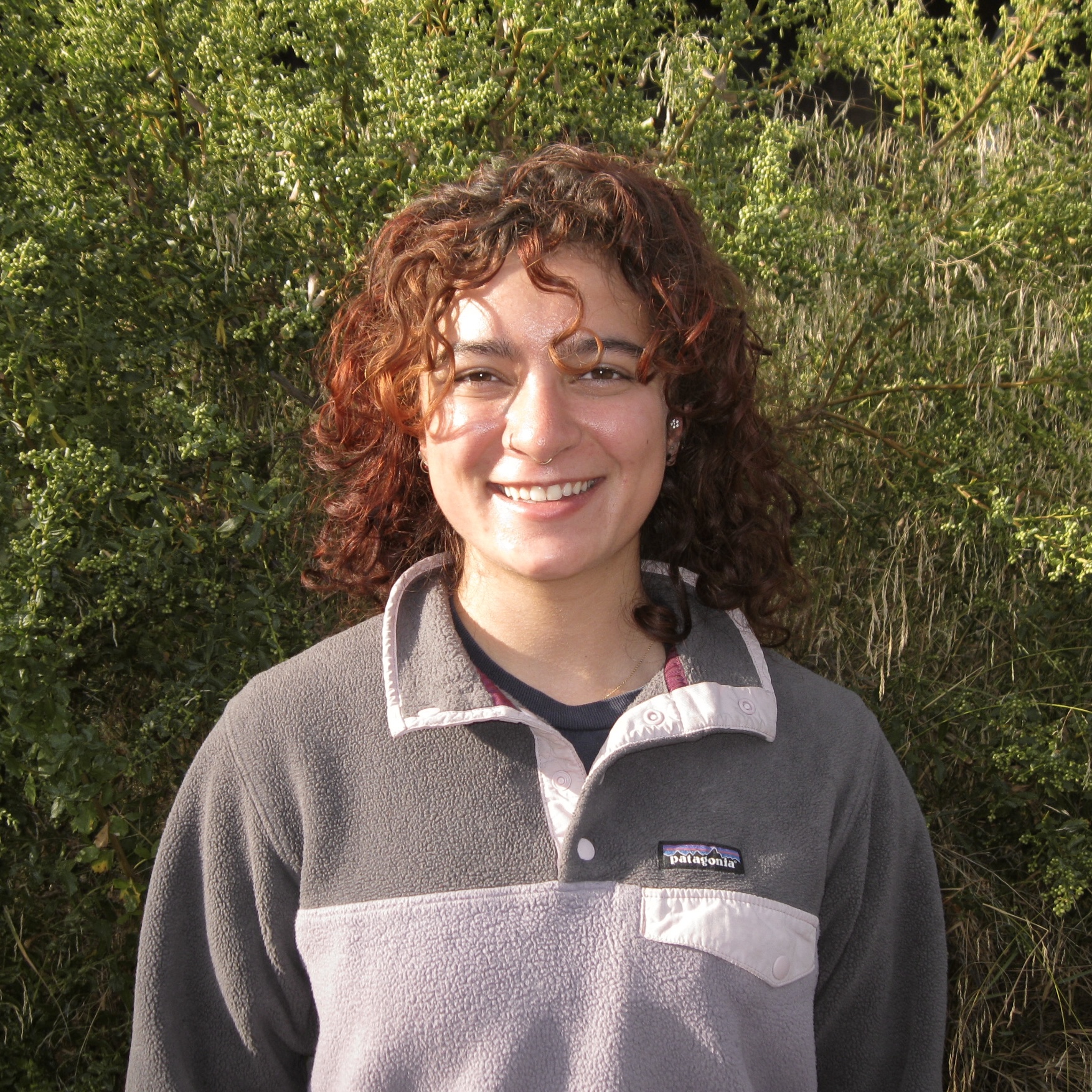
I’m not an ecologist by training. After graduating with my economics degree, I’ve used my education in supply and demand to work as a wrangler, mule packer, and horsemanship student. I might not have the B.S. to show for it, but I’ve spent months immersed in the natural world, riding through mountains in California, New Mexico, Mongolia, and many places in between. Granted, I’m usually so focused on the six mules tied together in my pack string that I never stopped to tell the difference between a pine, a fir, or a cedar.
Knowing the difference between trees is a pretty reasonable expectation for an employee of an organization with a large focus in forestry. When I started my GrizzlyCorps fellowship at Shasta Valley Resource Conservation District, I expected I’d be learning ecology on the fly while assisting with fieldwork. I just didn’t figure that my favorite ecology teacher would be a horse named Sunshine.
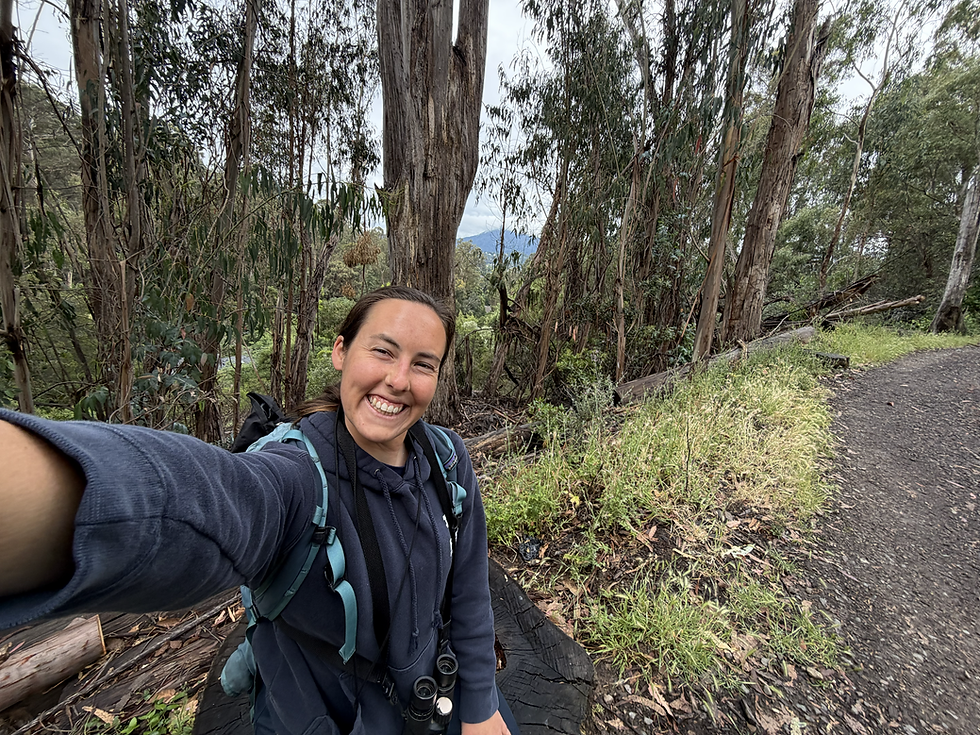
It didn’t exactly start with Sunshine, it started with the California Naturalist course I signed up for a few months ago, hoping to learn a bit more about ecology in Siskiyou County. Every three weeks, I take downloads on SVRCD’s water quality monitors across the Shasta River watershed and I wanted to better understand how riparian vegetation and wildlife changed across my site visits. So I sacrificed my Saturdays, trading cowboy boots and lariats for hiking boots and binoculars.
Around the same time I started my CalNat course, I befriended Laurie, who has been colt starting for over 30 years, working with young horses and mules to carry a saddle and rider for the first time. In a world where many people seek to dominate or “break” a horse, she sees things differently, approaching horsemanship as true kinship with an intelligent animal. From her mentorship, I am seeing how to build reciprocal partnerships with horses rather than one-dimensional passengerships. I learned many of these lessons working with Sunshine, Laurie’s dependable mare who, like everyone, still has many quirks.

Recently, my weeks have been booked with CalNat courses on Saturdays and horses on Sundays and weekday evenings. As Laurie and Sunshine show me more about horsemanship, I realize how much the relationship-building, communication, and patience I practice weaves into everything I do.
As I continue to expand my understanding of all life– from horses and mules to songbirds and grasses and oak trees, here are a few of the lessons I have learned:
The gift of attention
Arguably, horses are better than people at paying attention. As prey animals, horses are hardwired to recognize threats and react immediately. Unlike humans, they are not caught in woulds, coulds, and shoulds. They are attuned to the heartbeats, breathing, and body language of the herd around them, ready to take instant flight. In being so present, they act as mirrors– their emotional and physical states are reflections of their circumstances around them. If you’re stressed, they’re stressed. If you’re calm, they’re calm. Effectively working with horses demands perception of their subtle signals and adjustment of your own to achieve mutual understanding. For a horse to listen to you, you must first listen to them.
When I met Sunshine, I noticed two things about her. Immediately, I saw that her left eye is clouded, meaning that she perceives her surroundings on that side slightly distorted. I also learned that she does not enjoy being quickly cinched.
Grooming and saddling a horse are muscle memories embedded into me since I started riding at eight years old. Unconsciously, I found myself checking out, thinking about the ride ahead, instead of checking in with the animal. Sunshine quickly corrected this when I tightened the cinch around her belly and she reached around to nip as if to say “Whoa girl, you’re going too fast.” She had negative saddling experiences in her past, and in my state of inattention, I had missed her earlier signals— lip twitches and muscle tensions that showed how unpleasant it was to be saddled without care. Laurie showed me how to tighten a cinch with light pressure, gently release, and repeat until the area around Sunshine’s mouth relaxed and she sighed. That was her way of telling us she was ready to be cinched. After receiving my undivided attention, she had gifted me hers.

In a way, hiking had become a similar motor routine. I was often so focused on putting one foot in front of the other, trying to reach an alpine lake, fieldwork site, or panoramic view that I missed out on perceiving what was around me. Fortunately, my CalNat course was not a hiking course, but an observation course. During our first session, we drove to the top of Antelope Mountain, a 6,000 foot shale peak bordering the course site at Guys Gulch Ecological Reserve. We were tasked with nature journaling- finding a “sit spot,” observing what we saw and heard, and recording it with drawings and notes.
I sat down near a small stand of trees and decided to stare at a pinecone near my foot. Pinecones probably wouldn’t have considered me their friend. I was accustomed to kicking them off the trail and clearing them from my ground so I had a flat place to lay my bedroll. In the 40 minutes that I rolled the pinecone around in my hand, replicating its qualities with my pen and watercolors, I noticed new things about it. Its spiky tips, the way the scales had opened to release the seeds, the plants that surrounded where it fell on the ground. I felt like I understood a bit more how this pinecone fit interacted with its surrounding environment. When I finally set it back down I did not kick it aside.

The capacity to recalibrate
There is a quote from equine neuroscientist Dr. Stephen Peters, that I share with all of my non-horsey friends: “Regulation is not the absence of disturbance, it is the capacity to recalibrate.”
Growth in horses, and in people, does not come from withholding new experiences. Nor does it come from flooding challenges all at once. It comes from gradual introduction to experiences just beyond the comfort zone, where the horse learns to find safety, relaxation, and self-regulation at the new threshold. Eventually, horses can learn to approach new and busy situations with curiosity and self-trust.
Sunshine is a seasoned, trusting mare. However, catching sight of sudden movement in her cloudy eye can still occasionally spook her. On a windy day, she startled and jumped back when a small flag on a stick caught a gust and tumbled from its spot against the fence. Rather than avoiding the culprit that distressed her, Laurie picked up the flag and let Sunshine investigate it with her whiskers. She showed me how to re-introduce the object in a friendly way, moving it around the left side of Sunshine’s body so that she could see it with the cloudy eye. At first, Sunshine stood firm and tense, staring hard, nostrils flared, but as she began to realize that she was safe, even with the scary flag touching her, she began to lower her head, blink, and chew. When stressed, horses' mouths go dry as they prepare to go into flight. As they return to a calm state of mind, they begin to salivate again, licking and chewing. Sunshine was learning that even in tough situations, she could recalibrate.
Plants are experts at recalibration. While us humans often think of “disturbance” with negative connotations, many species have adapted to evolve around ecosystem alterations like fire, grazing, and floods. As with horses, where it takes many safe experiences to strengthen neural pathways beyond fight or flight, plants take many generations to recalibrate and survive in challenging environments.
On an early Saturday morning, my CalNat class stared up at one of these environments. Bluffs of serpentinite rocks ringed the area around Castle Lake, formed millions of years ago by the mixing of ancient ocean and seafloor crust. When these green, scaly rocks break down, they form thin, poor soils, called serpentines, that dot the Klamath region. Serpentine soils are low in calcium, but high in magnesium. Plants need calcium for growth, but the ability to absorb it is inhibited by high amounts of magnesium, making serpentine conditions extremely difficult for the survival of most species (USFS). However, the Klamath region hosts many species uniquely adapted to the challenges of serpentine soils.
A few weeks later, while hiking in the mountains, I came across what looked like a small, grassy meadow. When I stepped closer, I realized it was a wetland full of carnivorous pitcher plants, adapted to consume insects to supplement their poor intake from the serpentine soil. The plants were tubular, slippery, and looked a little bit extraterrestrial amid the conifers. Yet I felt a deep respect for their ability to thrive in such unusual conditions. I thought about Sunshine’s growing comfort during unpredictable windy days and smiled as I imagined a bit of her resilient nature in each of the pitcher plants.

What is stewardship?
During my adventures in conservation, equines, and economics, I fell in love with ranching as the perfect intersection of those interests. I spent most of my life in urban areas, so when I tell friends about my aspirations, I’m not surprised when I’m met with mild judgement. Many say “Isn’t that terrible for the environment?” while conjuring images of bare soil, cow paddies, and eroded stream banks.
These conversations remind me of the remarks I hear occasionally when I tell people that I ride horses: “Should we even be riding them? How do you know that they enjoy it?”
While there are absolutely ranchers that overgraze and horses that don’t enjoy being ridden, strong stewardship builds a reciprocal relationship between humans, animals, and the landscape. Reciprocity starts with noticing, paying attention, and allowing for recalibration. Ranchers pay attention to the health of their grass, soils, and water systems and adjust management strategies. Horsemen and women pay attention to the flick of an ear, and the blink of an eye when asking something of their horse. Both groups seek to achieve mutually beneficial goals: healthy pastures and profitable business operations, engaged horses and confident riders.
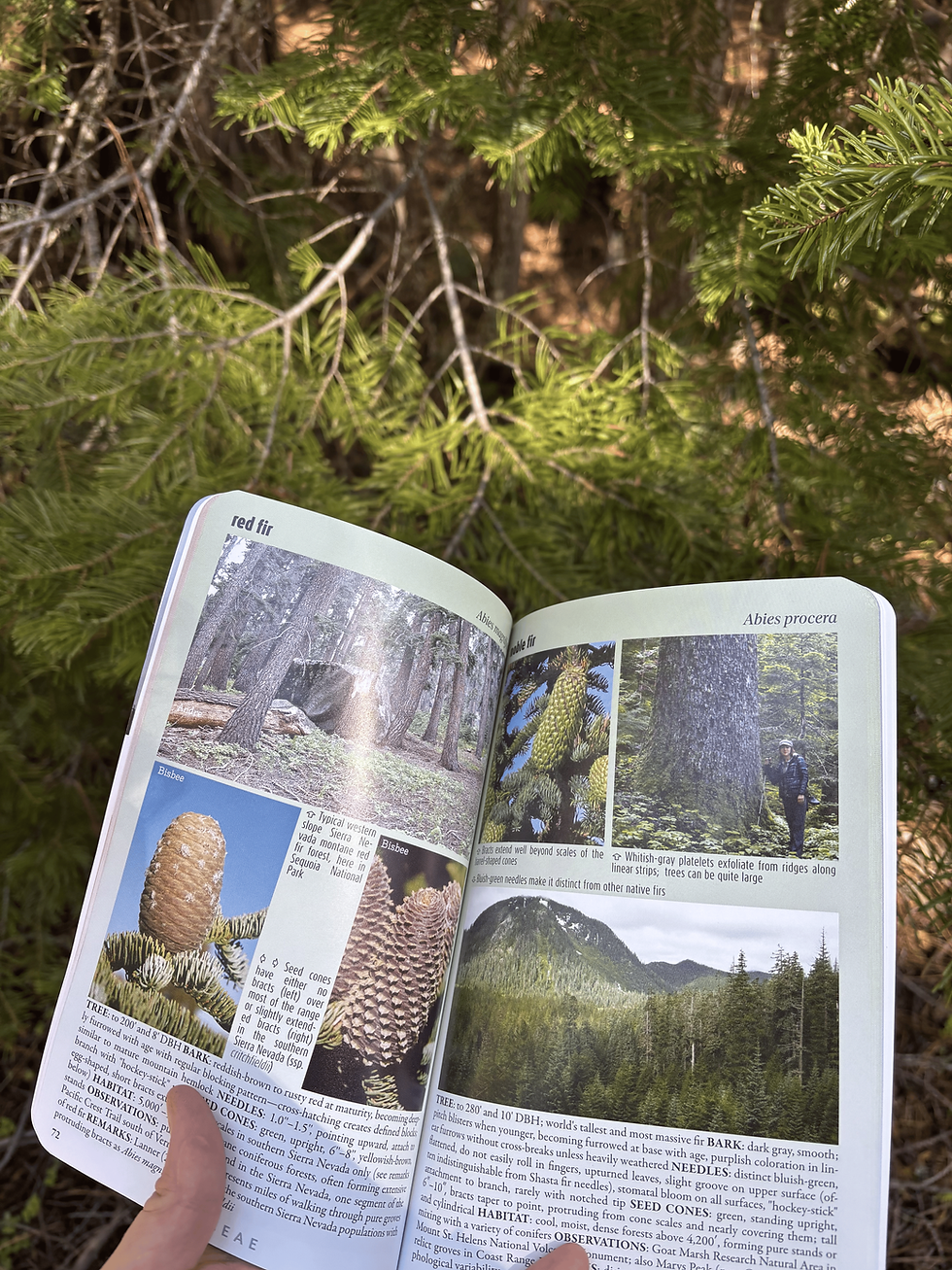
Learning to be a better steward of Sunshine has guided me to better land stewardship… and vice versa. Paying attention to the behavior and body language of horses was the key that finally encouraged me to look close enough to tell the difference between a pine, fir, and cedar.

Comments